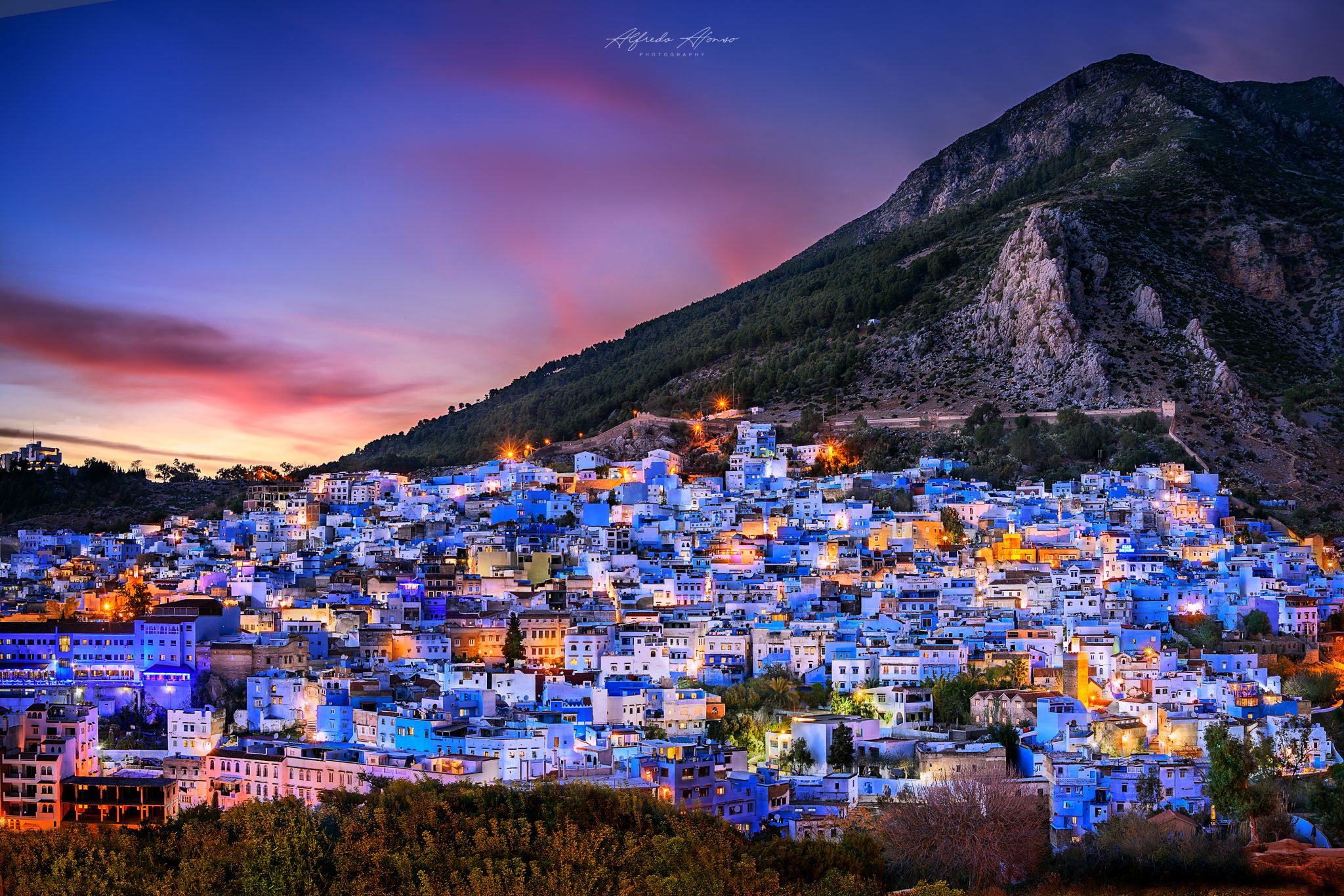
If Tangier is the “Bride of the North,” then Chefchaouen is undoubtedly its most mystical neighbor. Tucked away in the heart of the Rif Mountains, this small city has become a global icon, famous for its labyrinthine alleys painted in every imaginable shade of blue.
But why is it blue, and what makes it so magnetic for travelers
A Sea of Azure in the Mountains
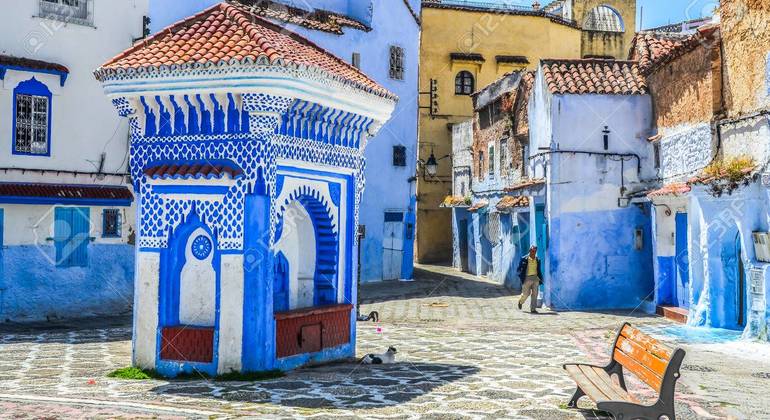
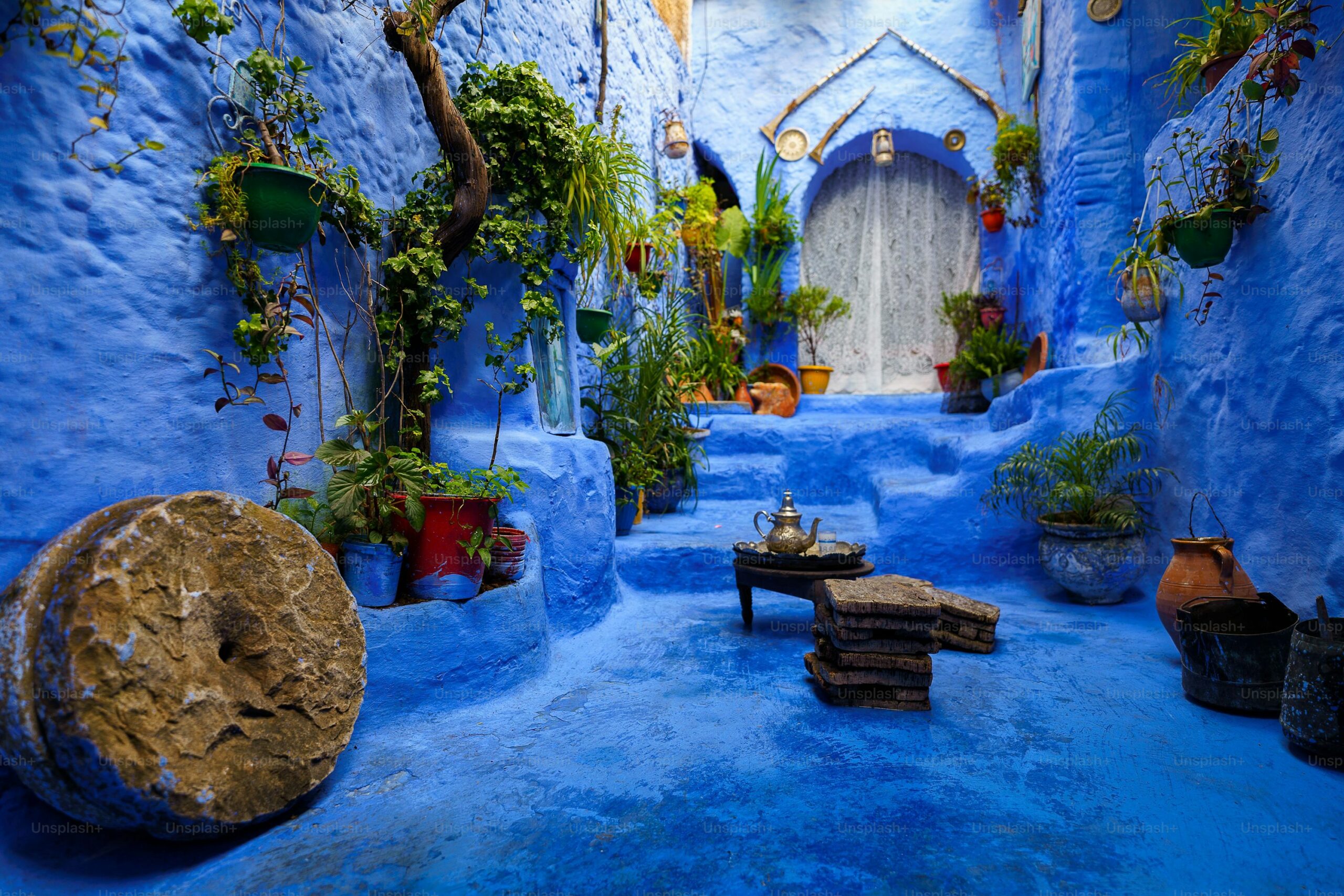
Walking into the Medina of Chefchaouen feels like stepping into a watercolor painting. From deep indigo to pale sky blue, the walls, doors, and even the steps are washed in color.
While there are many theories behind the blue—some say it was introduced by Jewish refugees to symbolize the sky and heaven, others say it keeps mosquitoes away—the result is the same: a profound sense of calm. For the modern tourist, it is a “slow-travel” paradise, far removed from the frantic energy of Marrakesh or Casablanca.
The Sound of Ras El Maa
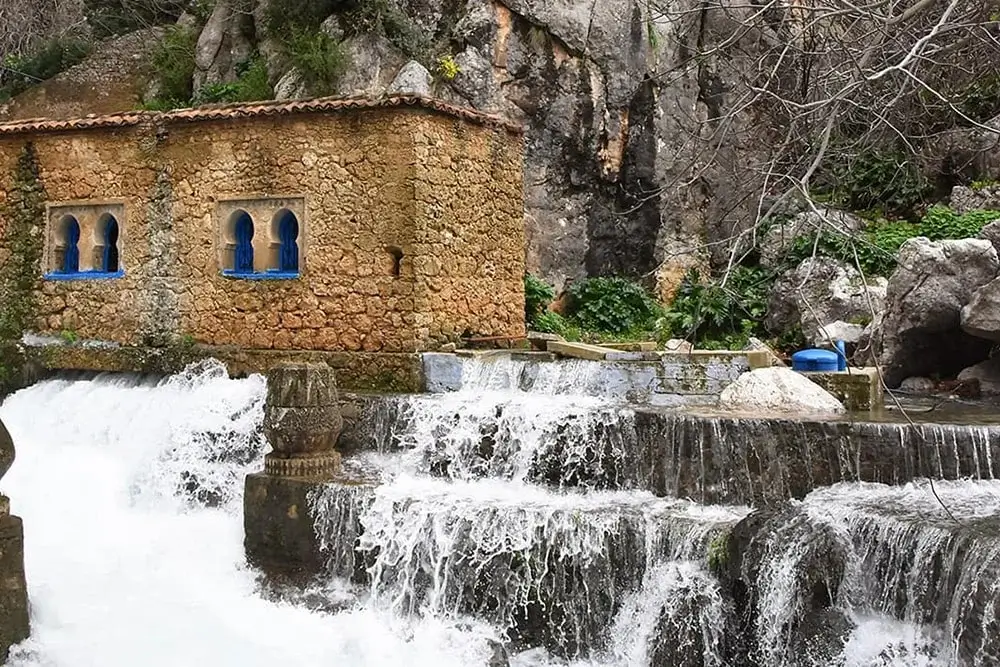
While the colors catch your eye, the sound of Chefchaouen defines the experience. The Ras El Maa spring is the lifeblood of the city. Here, you can watch local women washing rugs in the cold mountain water and listen to the gush of the rapids. It’s a refreshing reminder that despite its fame, Chefchaouen remains a traditional mountain village at heart.
A Hiker’s Paradise
Beyond the blue walls lies the raw beauty of the Talassemtane National Park. For tourists who love the outdoors, the hike up to the Spanish Mosque at sunset is essential. From that vantage point, you can see the entire blue city glowing against the backdrop of the limestone peaks (the name Chefchaouen actually means “Watch the Horns,” referring to the shape of the mountains).
The Flavors of the North
Chefchaouen is also famous for its unique culinary identity. Because of its mountain climate, the food here feels different:
- Jben: The famous local goat cheese, often served with honey or olives.
- Riffian Tagines: Typically made with wild mountain herbs and incredibly fresh olive oil.
- The Tea: Heavily scented with wild mint and “absinthe” (sheeba) during the colder months.
Why You Must Visit
Chefchaouen isn’t just a place for a photo op. It’s a place to breathe. It’s where the Mediterranean influence of the north meets the rugged spirit of the mountains. Whether you are getting lost in the “Al-Andalus” style architecture of the Kasbah or sipping mint tea in Plaza Uta el-Hammam, the city stays with you long after you leave.
If Tangier is the elegant bride, Chefchaouen is the quiet soul of the Moroccan North—a blue dream you never want to wake up from.