Planning a trip to Morocco and wondering when to actually book those flights? It’s one of the most common questions we get, and honestly, the answer isn’t as simple as “just pick any month.” Morocco is a surprisingly diverse country geographically, which means the weather can vary dramatically depending on where you’re headed and when.
A scorching August afternoon in the Sahara feels nothing like a breezy summer evening in Essaouira. And that gorgeous spring weather everyone raves about in Marrakech? It might still be snowing in the Atlas Mountains at the same time.
In this guide, we’ll break down exactly what is the best time to visit Morocco, season by season, region by region, so you can plan your trip around the experience you actually want.
🌍 Why Morocco’s Climate Is More Complex Than You’d Think
Morocco sits at a unique geographic crossroads. You’ve got the Atlantic coast on one side, the Mediterranean on another, the towering Atlas Mountains cutting through the middle, and the Sahara Desert stretching out to the south and east.
This means that on any given day, you could have:
- Cool coastal breezes in Essaouira
- Comfortable spring-like temperatures in Marrakech
- Snow-capped peaks in the High Atlas
- Blazing desert heat in Merzouga
All at the same time, all in the same country. So when people ask “what’s the best time to visit Morocco,” the honest answer is: it depends entirely on what you want to do and where you want to go.
🗓️ Morocco Weather by Season: The Complete Breakdown
🌸 Spring (March to May): The Sweet Spot
If we had to pick just one season to recommend to most travelers, spring wins almost every time.
Why spring works so well:
- Comfortable temperatures across most of the country (18-25°C in most cities)
- Wildflowers and greenery, especially in the Atlas Mountains
- The famous almond blossoms bloom in the Tafraoute region (February-March)
- Desert nights are cool but manageable, not freezing
- Fewer crowds than summer, but tourist infrastructure is fully operational
- Perfect hiking conditions in the Atlas Mountains before summer heat sets in
What to expect region by region:
| Region | Average Temp (Spring) | Conditions |
|---|---|---|
| Marrakech | 20-27°C | Warm days, cool evenings |
| Fes | 15-24°C | Mild, occasional rain in March |
| Sahara Desert | 20-30°C (day), 10-15°C (night) | Comfortable for camping |
| Atlas Mountains | 10-18°C | Still cold at higher altitudes |
| Coastal cities | 17-22°C | Breezy, pleasant |
🌟 Insider tip: Late March through April is particularly magical if you’re planning any private excursions into the Atlas Mountains, since you get the dramatic contrast of green valleys against still snow-capped peaks.
☀️ Summer (June to August): Hot, Bright, and Bustling
Summer in Morocco is a season of contrasts. Some regions become nearly unbearable during the day, while others become the country’s biggest draw.
The good:
- Coastal cities (Essaouira, Agadir, Asilah) offer perfect beach weather
- Long daylight hours mean more time for activities
- Vibrant festival season (Gnaoua Festival in Essaouira, Mawazine in Rabat)
- Mountain areas provide a cool escape from lowland heat
The challenging:
- Marrakech and Fes regularly hit 38-45°C during the day
- The Sahara Desert becomes extremely hot, often exceeding 45°C
- Midday sightseeing in cities can feel exhausting
- Higher demand means higher prices, especially in coastal areas
Our honest recommendation for summer:
If you’re visiting in summer, prioritize the coast or stick to early morning and evening activities in the interior cities. Many locals and experienced travelers structure their days around the heat — sightseeing early, resting during peak afternoon hours, and enjoying dinner and evening walks once temperatures drop.
Desert trips are still possible in summer, but they require adjustment: camel treks typically happen at sunset rather than midday, and camps often provide extra shade and cooling arrangements.
🍂 Autumn (September to November): The Underrated Gem
Autumn might be Morocco’s best-kept secret among seasoned travelers. It offers nearly everything spring does, with a few added bonuses.
Why autumn deserves more attention:
- Temperatures gradually cool down from summer highs, settling into comfortable ranges by October
- The harvest season brings fresh produce and vibrant local markets
- Desert nights become pleasantly cool again without the harsh cold of deep winter
- Post-summer crowds thin out significantly, especially by October
- Prices often drop compared to summer peak season
Region-by-region autumn conditions:
| Region | September | October-November |
|---|---|---|
| Marrakech | Still warm (30-35°C) | Cools to 22-28°C |
| Sahara Desert | Very hot initially | Ideal by late October |
| Coastal areas | Warm, great beach weather | Cooling but still pleasant |
| Atlas Mountains | Comfortable for hiking | Getting cooler, beautiful colors |
💡 If you’re deciding between spring and autumn, consider this: autumn typically has slightly fewer tourists than spring, while offering nearly identical weather conditions by October and November.
❄️ Winter (December to February): Cold Nights, Mild Days
Winter in Morocco surprises a lot of first-time visitors. While coastal and lowland areas remain relatively mild during the day, nights can get genuinely cold — especially in the desert and mountains.
What winter actually looks like:
- Daytime temperatures in Marrakech and Fes typically range from 12-18°C — pleasant for sightseeing with a light jacket
- Desert nights can drop below freezing, sometimes to -2°C or lower
- The Atlas Mountains see actual snowfall, making it possible to ski near Oukaimeden
- Coastal areas stay mild but can be windy and occasionally rainy
- This is the low season, meaning better prices and fewer crowds
Best winter activities:
- City exploration in Marrakech, Fes, and Casablanca (comfortable daytime temps)
- Skiing in the Atlas Mountains (a genuinely underrated Morocco experience!)
- Desert camping with proper cold-weather gear
- Budget-friendly travel with lower accommodation rates
⚠️ Important packing note: If you’re planning any desert tours during winter, pack proper layers. The temperature swing between day and night in the Sahara during winter months can be dramatic — 20°C during the day dropping to near-freezing after sunset.
🎯 Best Time to Visit Morocco Based on What You Want to Do
Instead of just picking a season blindly, it often makes more sense to think about your priorities first.
If you want to visit the Sahara Desert
Best months: October to April (avoiding peak summer heat)
The desert is genuinely difficult to enjoy comfortably during peak summer (June-August) due to extreme daytime temperatures. Spring and autumn offer the best balance of warm days and bearable nights, while winter provides comfortable days but requires warm layers for chilly desert nights.
If you want beach and coastal experiences
Best months: June to September
Essaouira, Agadir, and Taghazout come alive during summer, offering perfect beach weather without the extreme heat that plagues inland cities during the same period.
If you want to hike in the Atlas Mountains
Best months: April to June, and September to October
These shoulder seasons offer the ideal balance — snow has melted from lower trekking routes but temperatures haven’t become dangerously hot, and higher altitude trails remain accessible without winter snow blocking paths.
If you’re on a budget
Best months: November to February (excluding holidays)
This is genuinely low season, meaning better hotel rates, fewer crowds at major attractions, and generally lower prices across the board. Just be prepared for cooler weather and pack accordingly.
If you want to avoid crowds entirely
Best months: Late September, November, and February
These months fall between the two high seasons (spring and the winter holidays), offering a nice balance of decent weather and noticeably thinner crowds at popular sites like Chefchaouen and the Marrakech medina.
If you want to experience local festivals
Best months: June (Gnaoua Festival), September (Mawazine sometimes falls here), and various religious observances throughout the year
Timing around festivals adds a unique cultural dimension to your trip, though it also means larger crowds in specific cities during those periods.
📆 Month-by-Month Quick Reference Guide
| Month | Overall Rating | Best For | Avoid If… |
|---|---|---|---|
| January | Good | City tours, skiing, budget travel | You hate cold desert nights |
| February | Good | Similar to January, slightly warmer | You want beach weather |
| March | Excellent | Almond blossoms, hiking, mild everywhere | N/A – great all-around month |
| April | Excellent | Perfect balance across regions | N/A – one of the best months |
| May | Very Good | Still comfortable before summer heat | You want cool desert nights |
| June | Good | Coastal areas, festivals begin | You’re heading to the Sahara midday |
| July | Fair (inland) / Good (coast) | Beach trips | Desert or inland city exploration |
| August | Fair (inland) / Good (coast) | Beach trips, festivals | Any strenuous inland activity |
| September | Very Good | Transition month, fewer crowds | N/A – great shoulder season |
| October | Excellent | Nearly ideal conditions everywhere | N/A – one of the best months |
| November | Very Good | Budget travel, mild weather | You want guaranteed warm evenings |
| December | Good | City tours, skiing, holiday atmosphere | You hate crowds (holiday period) |
🏜️ Regional Deep Dive: When to Visit Each Part of Morocco
Marrakech and the Central Plains
Best time: March-May and September-November
Marrakech gets brutally hot in summer, so unless you’re specifically drawn to that intensity, stick to the shoulder seasons for comfortable exploration of the medina, souks, and surrounding areas.
Fes and the Northern Imperial Cities
Best time: April-June and September-October
Similar pattern to Marrakech, though slightly milder overall due to elevation and northern location.
The Sahara Desert (Merzouga, Zagora)
Best time: October-April, avoiding peak summer
If desert camping and camel trekking are on your bucket list, aim for these cooler months. Many travelers combine desert visits with broader excursions covering multiple regions during these ideal months.
Chefchaouen (The Blue City)
Best time: April-June and September-October
The mountain setting means summers are more bearable here than in Marrakech, but spring and autumn still offer the most photogenic conditions with clear skies and comfortable walking weather.
Essaouira and the Atlantic Coast
Best time: May-September
This is genuinely one of the few places in Morocco where summer is actually the ideal season, thanks to consistent Atlantic breezes that keep temperatures pleasant even in August.
The Atlas Mountains
Best time: April-October for hiking, December-February for skiing
This region essentially has two distinct “best times” depending on whether you’re trekking or skiing.
🎒 Practical Tips for Timing Your Morocco Trip
Book accommodations early for peak periods
Spring (especially April) and the Christmas/New Year period see the highest demand. If you’re traveling during these windows, book your riads and desert camps at least 2-3 months in advance.
Consider Ramadan timing
Ramadan dates shift each year according to the Islamic lunar calendar. During this month, many restaurants close during daylight hours, and the general pace of life shifts. Some travelers find this a fascinating cultural experience, while others prefer to avoid it for practical reasons like limited daytime dining options.
Pack for temperature swings
Regardless of season, Morocco often has significant temperature differences between day and night, especially in the desert and mountains. Always pack layers, even in summer.
Factor in your specific itinerary
If your trip combines multiple regions (which we highly recommend), think about the sequence. For example, visiting the desert in early morning hours during a hot period, then moving to cooler mountain or coastal areas, can help you avoid the most uncomfortable conditions.
🌟 Our Overall Recommendation
If someone asked us to pick just one period for a first-time visitor with no specific priorities, we’d say: late March through May, or September through October.
These windows consistently offer:
- Comfortable temperatures across most regions
- Manageable desert conditions (not too hot, not freezing at night)
- Good hiking weather in the mountains
- Reasonable crowd levels
- Full operation of tours and activities without weather-related complications
That said, Morocco genuinely has something worthwhile happening year-round. Winter skiing, summer beach life, spring blossoms, autumn harvests — the “best” time really comes down to matching the season to your specific travel goals.
Whether you’re looking for guided activities tailored to a specific season or planning a comprehensive multi-region trip, timing your visit thoughtfully makes a genuine difference in how much you enjoy the experience.
❓ FAQ – Best Time to Visit Morocco
1. What is the overall best time to visit Morocco?
For most travelers, late March to May and September to October offer the best overall balance of comfortable temperatures, manageable crowds, and ideal conditions for both city exploration and desert excursions.
2. Is Morocco too hot to visit in summer?
It depends on where you’re going. Inland cities like Marrakech and Fes, along with the Sahara Desert, get extremely hot (often 38-45°C) during summer. However, coastal areas like Essaouira and Agadir remain pleasant throughout summer due to Atlantic breezes.
3. What is the coldest month in Morocco?
January is typically the coldest month, though “cold” is relative depending on the region. Coastal and lowland cities remain mild during the day (12-18°C), while desert and mountain areas can experience near-freezing nighttime temperatures.
4. When is the best time to visit the Sahara Desert?
The best time for Sahara Desert visits is October through April, avoiding the extreme summer heat. Spring and autumn offer the most comfortable balance of warm days and bearable nights, while winter requires warm layers for chilly desert evenings.
5. Can you visit Morocco during Ramadan?
Yes, you can absolutely visit during Ramadan, though it’s worth knowing that many restaurants close during daylight hours and the general pace of life shifts. Some travelers find it a unique cultural experience, while others prefer planning around it for convenience.
6. What is the rainy season in Morocco?
Morocco’s rainy season generally falls between November and March, with the northern regions (Fes, Chefchaouen, Rif Mountains) receiving more rainfall than the south. Rain is typically sporadic rather than constant, so it rarely disrupts travel plans significantly.
7. Is spring or autumn better for visiting Morocco?
Both seasons offer very similar weather conditions and are excellent choices. Spring tends to have slightly more tourists due to school holidays and the popularity of witnessing blooming landscapes, while autumn often has marginally fewer crowds with comparable temperatures by October.
8. When should I avoid visiting Morocco?
The most challenging period for general travel is July-August if you’re planning to spend significant time inland or in the desert, due to extreme heat. If crowds bother you, also consider avoiding the Christmas/New Year period and Easter week, when both domestic and international tourism peaks.
9. What is the best time for hiking in the Atlas Mountains?
April through June and September through October provide the best hiking conditions, with mild temperatures and clear trails. Higher altitude routes may still have snow in early spring, so check current conditions before planning ambitious treks.
10. Does Morocco have a specific festival season worth planning around?
Yes, several notable festivals occur throughout the year, including the Gnaoua World Music Festival in Essaouira (June) and Mawazine Festival in Rabat (typically June). These events add cultural richness to a visit but also increase crowds and accommodation prices in host cities during those specific dates.
🌍 Ready to Plan Your Perfect Morocco Trip?
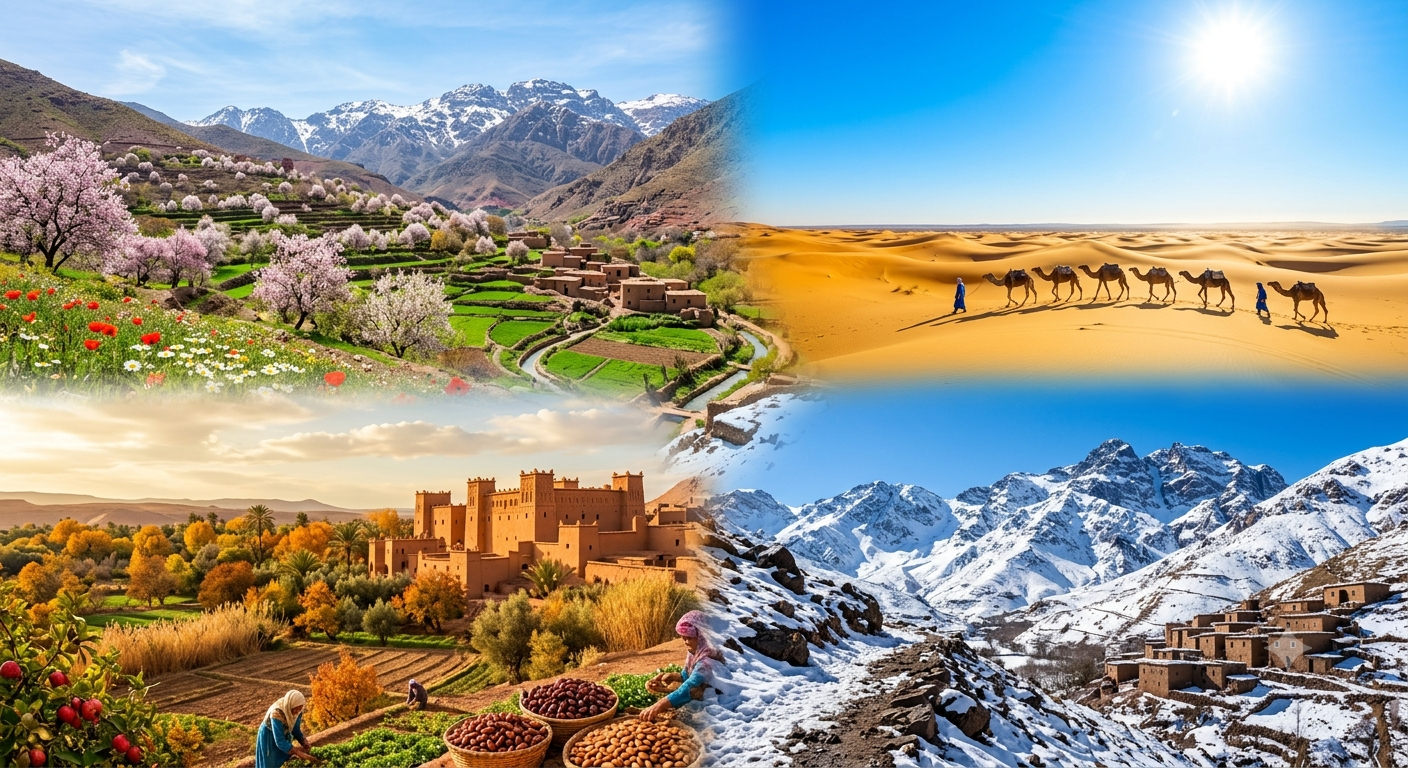
Understanding Morocco’s diverse climate is the first step toward creating a trip that actually matches your expectations. Whether you’re dreaming of blooming almond trees in spring, beach days in summer, harvest season in autumn, or snow-capped mountains in winter, there’s a version of Morocco waiting for you.
At Asmaa Travel, we help travelers plan their Morocco adventures around the perfect timing for their specific interests. Whether you’re drawn to desert camping, mountain trekking, coastal relaxation, or cultural city exploration, we can help you choose both the right season and the right itinerary.
👉 Explore our range of options to find what fits your travel style:
- Browse our excursions for day trips perfect for any season
- Check out our private excursions for personalized, flexible experiences
- Discover unique activities tailored to different times of year
- Explore our complete tours for comprehensive multi-day adventures
📩 Have questions about the best timing for your specific Morocco itinerary? Contact us today, and we’ll help you plan a trip that matches perfectly with your ideal season and interests.