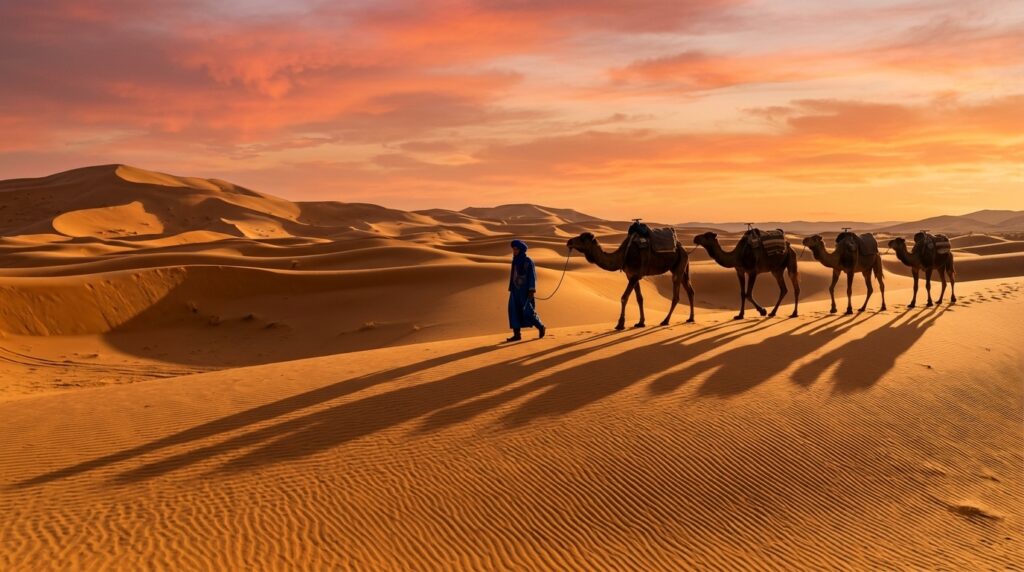
Picture this: the sun is beginning to set, painting the dunes in shades of orange and pink, and you’re swaying gently atop a camel as it makes its way across Erg Chebbi’s golden sand. If this is the image that comes to mind when you think of Morocco, you’re not alone — camel trekking in Merzouga has become one of the most sought-after experiences for travelers visiting the country, and honestly, it lives up to the hype.
But there’s more to planning this experience than just showing up and hopping on a camel. In this guide, we’ll walk you through everything you need to know about camel trekking in Merzouga, from what to actually expect during the trek, to choosing the right tour, packing appropriately, and understanding why this specific corner of the Sahara has become such an iconic destination.
🐪 Why Merzouga Is Morocco’s Camel Trekking Capital
Before diving into the practical details, it’s worth understanding why Merzouga specifically has become the go-to location for this experience, rather than other desert areas in Morocco.
What makes Merzouga special:
- Home to Erg Chebbi, Morocco’s most impressive dune formation, with some dunes reaching 150 meters
- Relatively accessible compared to more remote desert regions like Erg Chigaga
- Well-established tourism infrastructure built up over decades
- Consistent, dramatic sunrise and sunset views thanks to the dune orientation
- A genuine Berber and nomadic cultural presence still active in the region
Unlike some desert experiences that feel manufactured for tourists, Merzouga’s camel trekking tradition genuinely stems from how local Berber communities have moved through this landscape for generations. The camels used today (dromedaries, technically, since they have one hump) are the same breed traditionally used for desert transport across this exact terrain.
🗺️ Getting to Merzouga for Your Camel Trek
Most travelers combine their camel trekking experience with a broader desert tour, since Merzouga itself is quite remote.
From Marrakech
The most common starting point, requiring approximately 8-9 hours of driving, typically split over two days with stops at scenic locations along the way. Rather than tackling this journey independently, most travelers join an organized 3-day tour from Marrakech to Merzouga desert, which handles the entire journey while including stops at Ait Ben Haddou, Dades Valley, and Todra Gorge.
For those wanting a bit more time to properly explore these stops along the way without rushing, a 4-day tour from Marrakech to Merzouga desert offers a more relaxed pace while still culminating in the same unforgettable camel trekking experience.
From Fes
A similar journey time applies from Fes, typically routing through Ifrane, Azrou, and the Ziz Valley before reaching Merzouga.
Independent Travel
If you’re driving yourself or using public transport, you’ll arrive at one of the guesthouses on the edge of Erg Chebbi, where all camel treks depart from since vehicles cannot access the actual dunes.
🐫 What Actually Happens During a Camel Trek
Let’s break down exactly what to expect, since this varies somewhat but generally follows a predictable structure.
Meeting Your Camel (and Your Guide)
You’ll typically meet at a guesthouse or camp reception area on the edge of the dunes, where a local Berber guide will assign you a camel. Despite what movies might suggest, mounting a camel isn’t intimidating — you’ll be shown exactly how to sit as the camel kneels, and the guide leads the animals in a connected line (a caravan) rather than having you control the camel independently.
The Trek Itself
Duration: Most treks last 45 minutes to 1.5 hours, depending on your specific camp’s distance into the dunes.
Pace: Camels move at a slow, steady walking pace — this isn’t a fast-paced adventure activity, but rather a meditative, scenic journey through shifting sand formations.
Sensation: The camel’s gait creates a distinctive rocking motion, front-to-back rather than side-to-side. Most people adjust within the first few minutes, though it can feel unusual initially.
Photo opportunities: Guides are generally happy to pause briefly for photos, especially during golden hour when the lighting is most dramatic.
Sunset Timing
Most camel treks are specifically timed to have you arrive at your desert camp or a scenic dune viewpoint right as the sun sets, since this is genuinely the most magical time to experience the Sahara’s changing colors.
The Return Journey
If you’re doing a one-night desert camp experience, you’ll typically ride back to the starting point the following morning, often timed with sunrise for those willing to wake up early — and trust us, it’s worth it.
🏕️ Camel Trekking + Desert Camp: The Complete Experience
While it’s technically possible to do a short camel ride without an overnight stay, the vast majority of visitors combine their trek with at least one night in a desert camp, and we’d genuinely recommend this approach.
Types of Desert Camps
Standard/Traditional Camps:
- Shared or private Berber-style tents
- Basic but comfortable bedding
- Shared bathroom facilities (sometimes in a separate structure)
- Communal dinner around a campfire with traditional music
Luxury Desert Camps:
- En-suite bathrooms within private tents
- Proper beds rather than mattresses on the floor
- More elaborate dining setups, sometimes with private dining areas
- Additional amenities like charging stations, sometimes even small pools at certain premium camps
The Evening Camp Experience
Beyond the camel trek itself, the desert camp evening is often the highlight travelers remember most:
- Traditional Berber dinner, typically tagine or couscous, served communally
- Live music around the campfire, often featuring traditional drums and call-and-response singing
- Stargazing — with minimal light pollution, Merzouga offers some of the clearest night skies you’ll ever experience
- Genuine cultural exchange with your Berber hosts, who often share stories about desert life and nomadic traditions
📅 Best Time for Camel Trekking in Merzouga
Timing genuinely affects your comfort level significantly, given the desert’s extreme temperature variations.
Spring (March-May) and Autumn (September-November): Ideal
Comfortable daytime temperatures for the drive and arrival, pleasant evening temperatures for camping, and cool but manageable nights.
Summer (June-August): Challenging but Doable
Daytime temperatures can exceed 45°C, making midday activities genuinely uncomfortable. However, camel treks are scheduled for sunset and sunrise specifically to avoid peak heat, so the trek itself remains manageable — just prepare for a hot, sweaty day otherwise.
Winter (December-February): Cold Nights, Clear Skies
Daytime temperatures are pleasant for the trek itself, but nights can drop below freezing. This is genuinely one of the best times for stargazing due to exceptionally clear skies, provided you’re prepared with warm layers.
🎒 What to Pack for Camel Trekking
Based on countless traveler experiences, here’s what genuinely makes a difference:
Essential Items
- Head covering — a scarf, turban, or hat protects against sun and blowing sand
- Layered clothing — temperatures swing dramatically between day and night
- Comfortable, closed-toe shoes — sand gets everywhere, but proper shoes help for walking around camp
- Sunglasses — the sun reflecting off sand is intense
- Sunscreen — reapply more often than you’d think necessary
- Small backpack — for carrying water and personal items during the trek
- Portable phone charger — most camps have limited or no charging facilities
- Camera or phone with good battery life — you’ll want to capture the sunset/sunrise views
Nice to Have
- Reusable water bottle — staying hydrated is important, especially during warmer months
- Wet wipes — genuinely useful given the sand and limited washing facilities at basic camps
- A light jacket or fleece — even in summer, desert nights cool down significantly
- Basic first aid items — blister plasters if you’ll be walking, any personal medications
🐪 Is Camel Trekking Uncomfortable? Addressing Common Concerns
This comes up often enough that it deserves direct attention.
For most people, it’s genuinely fine
The camel’s gait can feel unusual for the first few minutes, but the vast majority of travelers, including those with no prior riding experience, report the experience as comfortable and enjoyable rather than physically taxing, particularly given the relatively short duration.
Who might find it more challenging
- People with pre-existing back or hip issues should mention this to their guide beforehand
- Pregnant travelers should consult with their doctor before booking
- Very young children may need to ride with an adult rather than independently
What guides typically do to help
Experienced guides adjust the pace based on group comfort, offer brief stops if needed, and can provide guidance on the most comfortable riding position throughout the trek.
🌍 Camel Trekking Etiquette and Cultural Awareness
Since this experience is deeply tied to genuine Berber cultural traditions, a bit of awareness goes a long way.
- Ask before extensive photography of your guides, particularly for close-up portraits
- Tip your guide — this is customary and genuinely appreciated, typically 50-100 MAD per person for the experience
- Show interest in the culture — guides often enjoy sharing information about desert life when travelers show genuine curiosity
- Respect the camels — they’re working animals central to local livelihoods, not simply photo props
🗺️ Choosing the Right Camel Trekking Tour
Since camel trekking is almost always part of a larger desert tour package, choosing the right overall itinerary matters significantly.
3-Day vs 4-Day Tours: Which Should You Choose?
3-Day Tour from Marrakech to Merzouga:
- Ideal if your time in Morocco is limited
- Covers the essential highlights: Atlas Mountains, Ait Ben Haddou, Dades Valley, and of course the camel trek and desert camp
- More intensive driving days, but still allows for meaningful stops
4-Day Tour from Marrakech to Merzouga:
- Better for travelers who want a more relaxed pace
- Additional time at scenic stops like Todra Gorge
- Less rushed overall experience, particularly valuable if you want to properly enjoy each location rather than just photograph it briefly
What a Quality Desert Tour Should Include
- Comfortable, air-conditioned transportation for the road portions
- An experienced driver-guide familiar with the route
- The camel trekking experience itself (usually included, sometimes offered as confirmed add-on)
- At least one night in a desert camp
- Dinner and breakfast at the camp
- Return transportation to your starting point
🔄 Alternative Desert Experiences Beyond Standard Camel Trekking
If you’re looking to customize your desert experience beyond the typical group tour format, there are additional options worth considering.
For travelers wanting more flexibility in timing, camp selection, or specific interests, exploring private excursions allows you to customize the desert experience according to your own schedule rather than following a fixed group itinerary.
Beyond camel trekking itself, the Merzouga area also offers additional activities worth considering, such as sandboarding on the dunes, 4×4 desert excursions to more remote areas, and visits to local nomadic families for deeper cultural insight.
If you’re interested in shorter, standalone desert experiences rather than a multi-day tour, checking available excursions can help you find options that fit your specific timeframe.
For those planning a more comprehensive Morocco itinerary that includes the desert as one component among several destinations, browsing our complete tours selection gives you a broader view of how the Merzouga experience can fit into a larger Morocco adventure.
📸 Best Photography Tips for Your Camel Trek
Given how photogenic this experience is, here are practical tips to capture it well:
- Golden hour is everything — the hour before sunset and after sunrise produces the most dramatic lighting on the dunes
- Silhouette shots work beautifully — position your camel/caravan against the setting sun for striking silhouette images
- Protect your camera from sand — a simple plastic bag or dedicated camera cover helps in windy conditions
- Capture the details, not just wide shots — camel saddle patterns, sand textures, and your guide’s traditional attire all make compelling images
- Don’t forget nighttime photography — if you have a tripod, the star-filled desert sky offers incredible astrophotography opportunities
❓ FAQ – Camel Trekking in Merzouga
1. How long does a camel trek in Merzouga typically last?
Most camel treks last between 45 minutes and 1.5 hours, timed to align with sunset or sunrise for the most scenic experience. Longer treks are sometimes available for those wanting an extended desert experience.
2. Is camel trekking uncomfortable or painful?
For most people, no. The camel’s gait feels unusual for the first few minutes but becomes comfortable quickly. People with pre-existing back or hip conditions should mention this to their guide beforehand for appropriate accommodations.
3. Do I need camel trekking experience beforehand?
Not at all. Guides handle the camels throughout the journey, leading them in a connected caravan, so no riding skills or experience are required from participants.
4. What should I wear for camel trekking in the Sahara?
Wear layered clothing to handle temperature swings, a head covering (scarf or hat) for sun protection, comfortable closed-toe shoes, and bring sunglasses and sunscreen regardless of season.
5. Is it safe for children to go camel trekking?
Yes, generally, though very young children typically ride together with an adult rather than on an independent camel. Always inform your guide of children’s ages beforehand so appropriate arrangements can be made.
6. How far is Merzouga from Marrakech?
Merzouga is approximately 560 km from Marrakech, requiring about 8-9 hours of driving, which is why most travelers opt for a 3-day or 4-day tour that breaks up the journey with scenic stops.
7. Should I tip my camel trekking guide?
Yes, tipping is customary and genuinely appreciated. A typical range is 50-100 MAD per person for the camel trekking and desert camp experience combined, though this can vary based on your overall satisfaction with the experience.
8. What’s included in a typical desert camp experience with camel trekking?
Most packages include the camel trek itself, one night’s accommodation in a desert camp (shared or private tent), dinner featuring traditional Moroccan cuisine, live Berber music around the campfire, and breakfast the following morning before the return trek.
9. What’s the best time of year for camel trekking in Merzouga?
Spring (March-May) and autumn (September-November) offer the most comfortable overall conditions, though camel treks are scheduled for sunset/sunrise year-round, making even summer visits manageable for the trek itself despite hot daytime temperatures.
10. Can I do camel trekking without staying overnight in the desert?
Yes, shorter standalone camel trekking experiences without overnight camping are sometimes available, particularly for travelers with very limited time. However, most visitors find that combining the trek with at least one overnight camp stay creates a significantly more complete and memorable experience.
🌟 Ready to Experience Camel Trekking in Merzouga?
Camel trekking in Merzouga isn’t just an activity to check off a list — it’s genuinely one of those experiences that tends to stick with travelers long after they’ve returned home. The combination of ancient tradition, dramatic landscape, and that particular quality of silence you only find deep in the Sahara creates something that photos, honestly, never quite capture fully.
At Asmaa Travel, we’ve designed our desert tours to ensure this experience lives up to everything you’re hoping for, with reliable transportation, comfortable camps, and guides who genuinely know and love this landscape.
👉 Ready to plan your Sahara adventure?
- Explore our 3-day tour from Marrakech to Merzouga desert
- Consider our more relaxed 4-day tour from Marrakech to Merzouga desert
- Browse our private excursions for a customized desert experience
- Discover additional activities to enhance your desert visit
- Check our excursions for shorter desert experiences
- View our complete tours for comprehensive Morocco itineraries
📩 Contact us today to book your camel trekking adventure in Merzouga and experience the magic of the Sahara for yourself.